Review Evidence Packet
We collect URLs, screenshots, dates, reviewer patterns, policy notes, business records, and platform ticket details.
Work with ethical security specialists who translate urgent searches into authorized, documented cyber defense. The scope covers fake review reporting, impersonation evidence, defamation documentation, search-result suppression, and owned-profile cleanup.
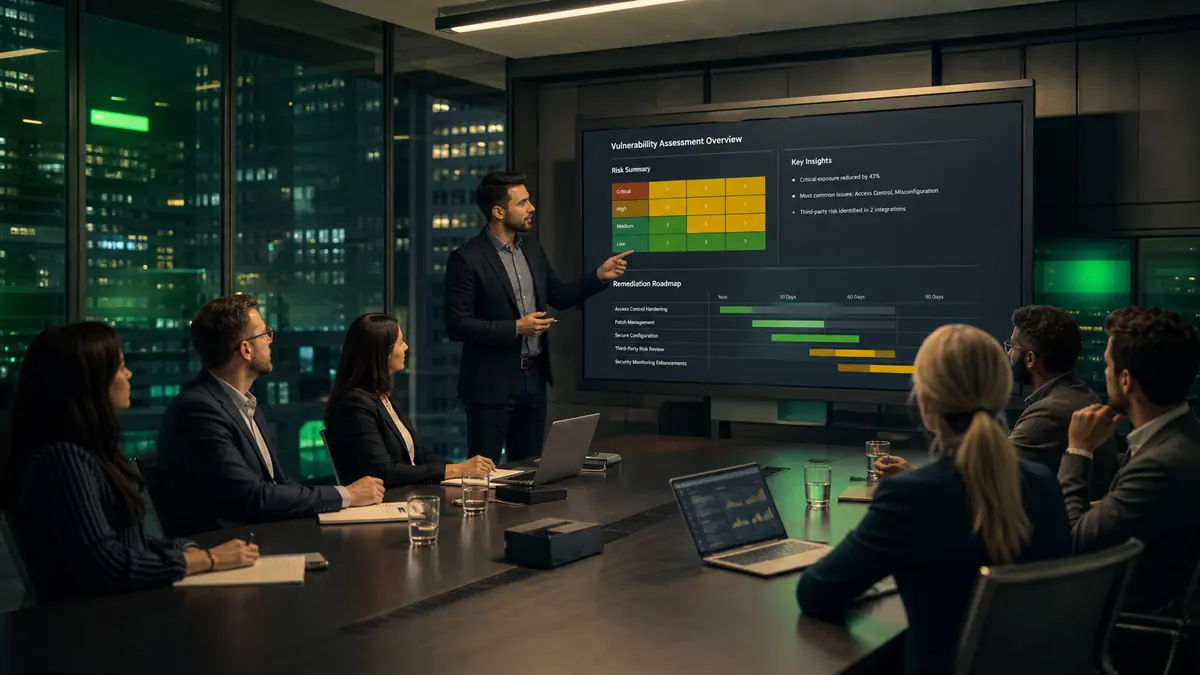
EthicalCracker helps businesses document fake reviews, impersonation, coordinated abuse, scam listings, defamatory claims, and platform-policy violations so removal requests or suppression plans are evidence-led.
We do not hack review platforms, delete legitimate customer feedback, threaten reviewers, or manipulate ratings. We help clients build clean evidence packets, improve owned profiles, and respond through lawful platform processes.
A damaging review problem can involve fake accounts, competitor abuse, impersonation, search-result pollution, social harassment, or poor profile hygiene. Clients need a calm plan that separates removable abuse from feedback that needs operational response.
We collect URLs, screenshots, dates, reviewer patterns, policy notes, business records, and platform ticket details.
We match the issue to platform rules for impersonation, conflicts of interest, spam, harassment, fake engagement, or prohibited content.
We improve the business-owned signals that customers and platforms see, including profile accuracy and response consistency.
When removal is not realistic, we help plan lawful content and profile improvements that reduce the visibility of harmful results.
We do not break into accounts, delete third-party content illegally, or sell fake reviews.
The output gives owners a practical path for removal requests, responses, documentation, and monitoring.
We support policy-based reporting, evidence organization, profile cleanup, and lawful content strategy. We do not delete legitimate reviews, hack platforms, buy fake engagement, or impersonate customers.
| Decision Point | Ethical Service | Unsafe Shortcut |
|---|---|---|
| Access | Written permission and scoped assets. | Secret access, stolen credentials, or unclear ownership. |
| Method | Documented testing, investigation, and evidence handling. | Vague promises with no defensible method. |
| Output | Report, evidence, risk rating, remediation, and retest path. | Screenshots or claims that cannot be verified. |
| Risk | Designed for compliance, recovery, and business action. | Legal, payment, platform, and reputation risk. |
What the work produces matters more than how it sounds. Expect ranked findings, reproducible evidence, owners, dates, and a closure record — not a glossy PDF and a hope that the right thing happens next.
fake review reporting, impersonation evidence, defamation documentation, search-result suppression, and owned-profile cleanup
URL inventory, policy review, removal packet, profile cleanup, content plan, and progress report.
We help recover and harden accounts, devices, and data the client can prove ownership of. We do not break into accounts, install hidden monitoring, intercept messages we are not a party to, or bypass platform protections of any kind.
Legal Online Reputation Management fits clients who can prove ownership or authority and need decisions about fake review reporting, impersonation evidence, or defamation documentation.
Legal Online Reputation Management timing depends on evidence quality, access approval, stakeholder availability, asset count, and the depth of validation required.
Legal Online Reputation Management pricing changes with urgency, records to review, systems in scope, reporting depth, retesting, and the level of stakeholder support.
Good cybersecurity work should explain how the engagement unfolds and why each step exists.
Confirm who owns the asset, who can approve access, what fake review reporting evidence exists, and what decision the client needs.
Document fake review reporting, impersonation evidence, exclusions, timing, communication paths, emergency contacts, and evidence-handling limits.
Use approved manual review, tooling, and records to evaluate fake review reporting, defamation documentation, and risk without drifting outside scope.
Return prioritized findings, business impact, remediation guidance, owners, and validation steps tied to the approved scope.
A reliable provider can explain intake, authorization, evidence handling, and reporting for fake review reporting before quoting broad security work.
Promises around secret access, guaranteed account control, surveillance, deleted reviews, or platform bypasses are warning signs for this request.
The report should cover affected assets, proof, impact, remediation notes, owners, and validation steps connected to fake review reporting.
The provider should understand fake review reporting, impersonation evidence, defamation documentation, search-result suppression, and owned-profile cleanup, including the assets, owners, constraints, and outcomes in this scope.
Ask how logs, screenshots, credentials, platform records, client data, and other Legal Online Reputation Management evidence will be minimized and protected.
A serious consultation may narrow, reroute, or refuse parts of the request so the final work stays legal and useful.
Work through the points below before signing a scope: what is being reviewed, what counts as evidence, what the work refuses, and what the deliverable proves.
Some content may violate platform rules because it is fake, impersonating, spam, abusive, conflicted, private, or unrelated. Legitimate negative feedback may need a response and operational fix instead.
We ask for review URLs, screenshots, business records, suspected patterns, prior reports, platform responses, and the business impact.
Illegal deletion promises can cause platform penalties, legal exposure, and more reputational harm. A defensible process gives the business a cleaner long-term position.
The next path may include better profile signals, official responses, customer-support improvements, content suppression, monitoring, and legal review where appropriate.
Buyers reach this page for very different reasons. Each path below points to the safe service shape for that situation.
Document suspicious patterns and platform-rule violations for reporting.
Collect profile links, screenshots, brand ownership proof, and platform escalation notes.
Plan lawful suppression, owned profile cleanup, and monitoring.
Separate removable abuse from real customer complaints that need a public response.
The useful deliverable includes URLs, screenshots, policy mapping, removal request notes, profile cleanup recommendations, response guidance, and monitoring steps.



Scope depends on number of platforms, review volume, impersonation complexity, evidence quality, legal sensitivity, and monitoring needs.
| Engagement Size | Typical Fit | What Changes the Scope |
|---|---|---|
| Legal Online Reputation Management triage | A narrow question around fake review reporting or suspicious activity. | Evidence quality, access availability, urgency, and the number of records to review. |
| Focused Legal Online Reputation Management | A defined engagement covering fake review reporting, impersonation evidence, and a specific deliverable. | Asset count, approval speed, test window, stakeholder review, and validation depth. |
| Program-level Legal Online Reputation Management | Recurring or multi-team work where Legal Online Reputation Management affects governance, monitoring, compliance, or several business systems. | Reporting cadence, control mapping, owner coordination, retesting, and executive support. |
Bring the items below to the first call and the engagement starts faster, cleaner, and at the right price.
Before legal online reputation management begins, define the exact business question, the assets or accounts in scope, the owner who can approve access, and the deadline behind the request. Keep the intake tied to fake review reporting, impersonation evidence, defamation documentation, search-result suppression, and owned-profile cleanup so the work begins with the buyer's real situation.
Collect only evidence that supports this specific engagement: system lists, alerts, screenshots, logs, URLs, configuration notes, policy records, or ownership proof tied to legal online reputation management. The goal is to prove the issue without spreading unrelated sensitive data.
Name the teams that can provide access, approve changes, receive findings, and close remediation. For legal online reputation management, ownership should map directly to the expected outputs: url inventory, policy review, removal packet, profile cleanup, content plan, and progress report..
A useful legal online reputation management report should show what was reviewed, what was found, why it matters, what evidence supports it, who owns the fix, and how success will be validated. That makes the report useful to decision-makers and technical owners.
Be careful with providers who cannot explain how legal online reputation management will be scoped, what evidence they need, what they refuse, or how the final deliverables will help your team act. Vague promises are a poor substitute for a defensible method.
After delivery, assign owners, address the highest-risk findings, document accepted risk, update controls, schedule validation, and keep a clean record of url inventory, policy review, removal packet, profile cleanup, content plan, and progress report. for leadership, compliance, or follow-up work.
Define the risk question around fake review reporting before work starts, then compare findings, fixes, validation notes, and residual risk after delivery.
Every issue should map to an accountable team, suggested priority, evidence, and validation step for impersonation evidence.
Not every issue can be closed immediately. The report should separate urgent fixes, accepted risk, compensating controls, and backlog work.
Validation should prove the important fixes worked, update evidence, and leave a closeout record the client can reuse.
Run these checks before sharing anything sensitive. A provider who cannot answer them is not the one to trust with this work.
Know which assets, accounts, workflows, or controls should be reviewed and who can approve access. A focused legal online reputation management request is easier to quote, easier to deliver, and more useful than a broad request for general cyber help.
Searchers often use rough wording when they mean legitimate help. This page keeps the conversation on fake review reporting, impersonation evidence, defamation documentation, search-result suppression, and owned-profile cleanup, written authorization, evidence, and remediation. It does not convert aggressive search language into unauthorized access or platform bypass promises.
Good examples should match the service. For legal online reputation management, useful proof may include scope notes, affected systems, screenshots, logs, control evidence, owner assignments, risk ratings, remediation records, and validation steps.
Look for providers who can walk through their method end to end, name what they refuse, show a redacted sample deliverable, and explain how they handle sensitive evidence. Polish without those details usually signals marketing, not capability.
Arrive with documented ownership, the people who can approve access, a short business context, any prior reports or alerts, the deadline driving the work, and the decision the engagement is meant to support.
Legal Online Reputation Management can lead into related work such as incident response, penetration testing, cloud security, code review, monitoring, or compliance support. The related path should follow the evidence, not a generic service menu.
Every finding should connect to affected assets, observable evidence, realistic impact, a fix path, and a validation method. Unsupported claims should not drive legal online reputation management.
The work is not finished when a PDF lands. The client should assign owners, fix priority issues, document accepted risk, update monitoring or controls, and schedule validation that matches the original scope.
Good reputation work can produce stronger removal requests, cleaner profiles, better response guidance, search suppression actions, and a documented monitoring process.
A client used platform-compliant reputation support to review fake review reporting and decide which fixes mattered before the issue became more expensive.
The engagement turned impersonation evidence, screenshots, logs, ownership notes, and stakeholder questions into a usable action record.
The final package for Legal Online Reputation Management explained priority, proof, accountable owners, and validation steps instead of sending a generic scanner export.
URL inventory, policy review, removal packet, profile cleanup, content plan, and progress report.
Reviewed for authorization, fake review reporting, evidence quality, and whether the final deliverable supports a real security decision.
Frameworks are selected when they help this scope, especially for fake review reporting, impersonation evidence, audit evidence, incident handling, or platform policy.
Timing depends on evidence access, approval speed, asset count, stakeholder availability, and how much validation the Legal Online Reputation Management deliverable requires.
No. Legal Online Reputation Management starts only after ownership, permission, and scope are reviewed. Work outside that boundary is rejected.
We need contact details, assets in scope, proof of ownership or written permission, urgency, business context, and the outcome needed from the report.
URL inventory, policy review, removal packet, profile cleanup, content plan, and progress report.
Urgent triage can usually start within one business day. Scoped assessments commonly run from three business days to three weeks depending on complexity.
Yes. Pricing depends on urgency, number of systems, reporting depth, testing window, retesting, and whether forensic evidence handling is required.
Yes. Engagements can be covered by NDA, use least-privilege access, and limit retained evidence to what is needed for delivery, legal review, and remediation.
We guarantee a professional process and clear deliverables, not illegal access, manipulated outcomes, platform bypasses, or unverifiable promises.
We do not provide credential theft, unauthorized access, hidden surveillance, social media hacking, extortion, bank manipulation, review-platform hacking, malware creation, or instructions for illegal activity. Every engagement requires proof of ownership or written authorization.
Send the fake review reporting details, ownership proof, urgency, and the decision you need. We will confirm the allowed path before technical work begins.