If there is active harm
Start with incident response so evidence is preserved and containment decisions happen in the right order.
Clear answers about hiring ethical hackers, legal boundaries, authorization, pricing factors, timelines, reports, confidentiality, account recovery guidance, incident response, and what we refuse.
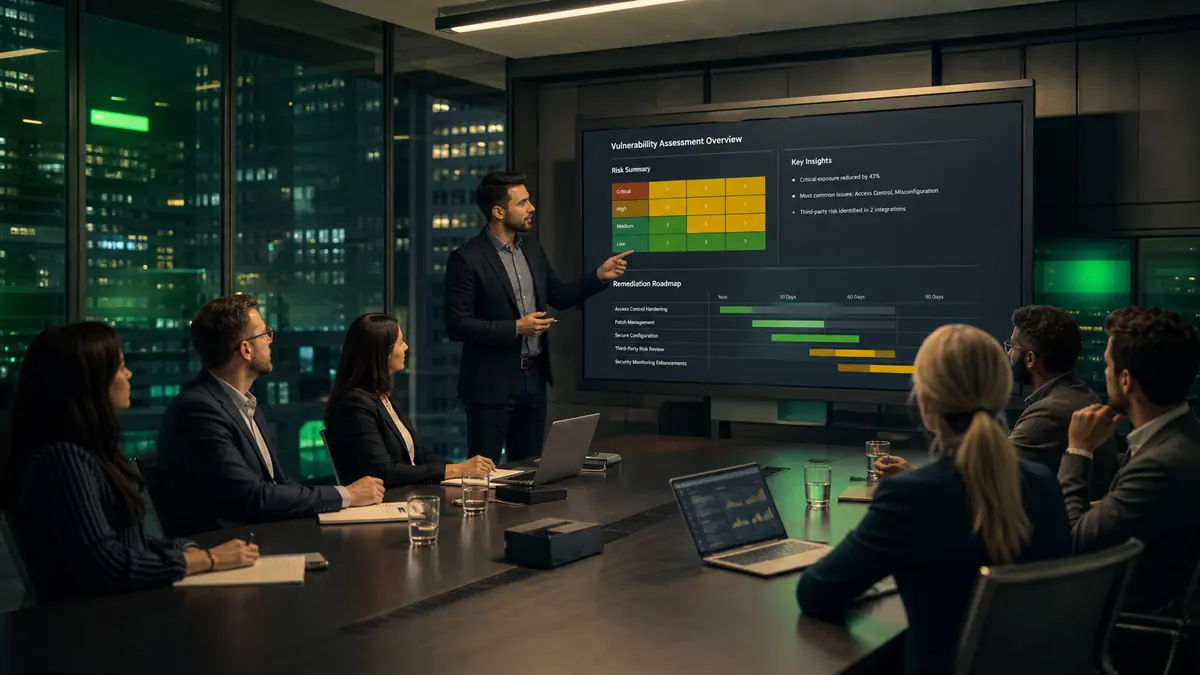
You can legally hire ethical hackers for systems, accounts, devices, applications, data, and cloud environments you own or have permission to review. You cannot hire us for secret access, spying, credential theft, malware, bank manipulation, review-platform abuse, or platform bypasses.
Start with incident response so evidence is preserved and containment decisions happen in the right order.
Start with penetration testing, secure code review, or cloud security depending on what protects the product.
Start with a consultation. We will redirect the concern into recovery, monitoring, documentation, or another legal service path.
No. Ethical Hacking and Hiring FAQ starts only after ownership, permission, and scope are reviewed. Work outside that boundary is rejected.
We need contact details, assets in scope, proof of ownership or written permission, urgency, business context, and the outcome needed from the report.
FAQ answers, service routing, authorization checklist, pricing guidance, and contact path.
Urgent triage can usually start within one business day. Scoped assessments commonly run from three business days to three weeks depending on complexity.
Yes. Pricing depends on urgency, number of systems, reporting depth, testing window, retesting, and whether forensic evidence handling is required.
Yes. Engagements can be covered by NDA, use least-privilege access, and limit retained evidence to what is needed for delivery, legal review, and remediation.
We guarantee a professional process and clear deliverables, not illegal access, manipulated outcomes, platform bypasses, or unverifiable promises.
We do not provide credential theft, unauthorized access, hidden surveillance, social media hacking, extortion, bank manipulation, review-platform hacking, malware creation, or instructions for illegal activity. Every engagement requires proof of ownership or written authorization.
Start with incident response or a scoped consultation. The first call should preserve facts, confirm ownership, identify the affected accounts or systems, and decide whether testing, investigation, monitoring, or recovery guidance is needed.
We can help with recovery guidance, account hardening, session review, device hygiene, MFA cleanup, evidence preservation, and official platform escalation. We do not break into accounts or bypass platforms.
We do not access bank accounts, alter balances, or manipulate credit records. We can help document fraud, organize evidence, secure related accounts, prepare dispute materials, and support lawful escalation.
A useful report explains scope, evidence, severity, business impact, remediation steps, owner recommendations, and validation criteria. It should be understandable to leadership and practical for technical teams.
Send the asset or account involved, proof of ownership or authority, what happened, when it happened, screenshots or logs if available, business impact, deadline, and who can approve access.
You can hire ethical help for recovery guidance, evidence review, account hardening, session cleanup, and official escalation when you own the account or represent the owner. We do not steal passwords, bypass MFA, or access someone else's account.
Hackers for hire is the broad search phrase people use when they need urgent help. Ethical hackers for hire is the legal version: written permission, defined scope, controlled testing, evidence, reporting, and remediation guidance.
We can help review suspicious device behavior, risky apps, account sessions, browser exposure, backups, recovery options, and evidence-preserving next steps. We do not install spyware or access another person's device.
No legitimate provider can guarantee crypto recovery. We can help document the scam, trace visible transactions, prepare exchange escalation details, protect remaining accounts, and organize evidence for lawful reporting.
Urgent requests are routed through incident response or urgent cybersecurity help. The first priority is containment, evidence preservation, access control, and safe next steps — not reckless activity.
Engagements can use NDA terms, limited evidence collection, least-privilege access, and restricted reporting. We still require lawful scope and may refuse work that asks for harm or unauthorized access.
We do not manipulate review platforms or impersonate users. We can help document abuse, preserve evidence, secure accounts, monitor impersonation, and prepare platform escalation materials.
No. We guarantee a professional process, clear deliverables, and honest boundaries. Guarantees of secret access, password recovery, fund return, or deletion from third-party systems are warning signs.
Yes, when the work is limited to systems, accounts, devices, applications, or data the client owns or has written permission to assess. Authorized security work — penetration testing, account recovery for your own account, investigation of your own device — is a normal commercial service. Unauthorized access to someone else's property is a federal crime regardless of who is asking.
For business assets, a written rules-of-engagement document signed by an owner or authorised officer is standard. For personal assets, ownership documentation — account email control, original purchase records for a device, registered domain ownership — is normally sufficient. We agree the exact form in scoping.
Only with the customer's or vendor's written consent. Owning a relationship does not transfer authorisation. Many third-party tests require the asset owner's explicit permission, even when the requesting party pays the invoice.
Scoped penetration tests commonly range from a few thousand to tens of thousands of dollars depending on the attack surface, depth, and reporting expectations. Incident response and recovery are usually retainered or hourly. Audits and compliance work scale with scope. We send a written estimate after intake — no surprise invoicing.
Depth and people. A two-week manual test by senior consultants is not the same product as a one-day scan with a templated report. Compare scope, manual hours, retest inclusion, and consultant seniority before comparing line items.
Urgent triage can often start the same business day after ownership proof and access are confirmed. Scoped assessments typically begin within one to two weeks once rules of engagement are signed. Complex multi-party engagements take longer because alignment, not technical work, drives the timeline.
Intake, written authorization and rules of engagement, manual review with tooling where appropriate, evidence-led findings, a draft report sent for technical review, the final report, and a retest of the remediated findings. The whole flow is repeatable rather than improvised.
Yes. Retesting the original findings is normally included with a scoped engagement and produces a closure record fit for auditors, customers, and leadership. A finding is closed when the fix is verified — not when a ticket is marked done.
Testing happens inside written rules of engagement with agreed windows, exclusions, and emergency contacts. Destructive or denial-of-service techniques are excluded by default unless explicitly authorized in a safe environment.
After scope is agreed, sensitive material moves over encrypted channels rather than standard email. Access is limited to the engagement team, retention is minimal, and material is not used for marketing, case studies, or training without written consent.
Only if you ask. Default behaviour is no public reference at all. If you want a logo or quote shared after the engagement, that is a separate decision recorded in writing.
Yes, but the first engagement is often more useful as a purple team — defenders watching attackers run techniques in real time and building detections as they go. A first red team without any detection baseline tends to produce a list of things you already suspected.
Yes — through managed cybersecurity MDR/SOC or a vulnerability-management retainer. Tests find the issues at a point in time; ongoing programs catch what changes after the report.
Unauthorized access to accounts, devices, or systems we cannot prove the requester owns. Hidden surveillance. Credential theft. Bank or credit manipulation. Removing legitimate negative content. Stalkerware installation. Any request that would itself violate computer-fraud, wiretap, or financial-crimes law. These are refused on every project, every time.
They are either lying to get a deposit, planning to defraud you a second time after the first scam, or actually willing to break the law on your behalf — which leaves you criminally exposed regardless of the outcome. Treat all three as scams.
Use these pages when your question turns into a specific service request.
authorized security help, account recovery guidance, device and phone security review, penetration testing, security audits, incident response, and dark web monitoring for systems you own or are permitted to assess.
penetration testing, threat modeling, vulnerability research, code review, and remediation planning.
web application, mobile, API, network, and business-logic testing performed with written authorization.
breach triage, suspicious login review, malware containment guidance, forensic evidence preservation, and recovery planning.
secure code review services, application security review, API security, authentication and authorization flaws, secrets handling, dependency risk, OWASP Top 10, CI/CD, infrastructure-as-code, and remediation examples.
AWS, Azure, and Google Cloud review for identity risk, public exposure, logging gaps, network rules, and deployment weaknesses.
all ethical hacking, penetration testing, red teaming, code review, cloud, incident response, monitoring, and recovery support services.
intake for authorized security assessment, incident response, account recovery guidance, code review, cloud security, and consulting.
Include proof of ownership, the affected asset, urgency, and the outcome you need.